
Idaho County Sex Offender Checks
The Idaho Central Sex Offender Registry is maintained by the Idaho State Police Bureau of Criminal Identification. It draws on registration data sent by county sheriffs, the Idaho Department of Correction, and juvenile justice. The public can search adult or juvenile databases, but public access does not turn a name and birth date into a positive identity match.
Use more than one search mode. A county search can find profiles tied to Idaho County, while a name search is useful for a known person. ZIP and map searches add place context. Direct lists show violent sexual predators, non-compliant registrants, and pending records. The registry's own warning should shape every result review.
The official acknowledgment screen places lawful use and identity limits before access.
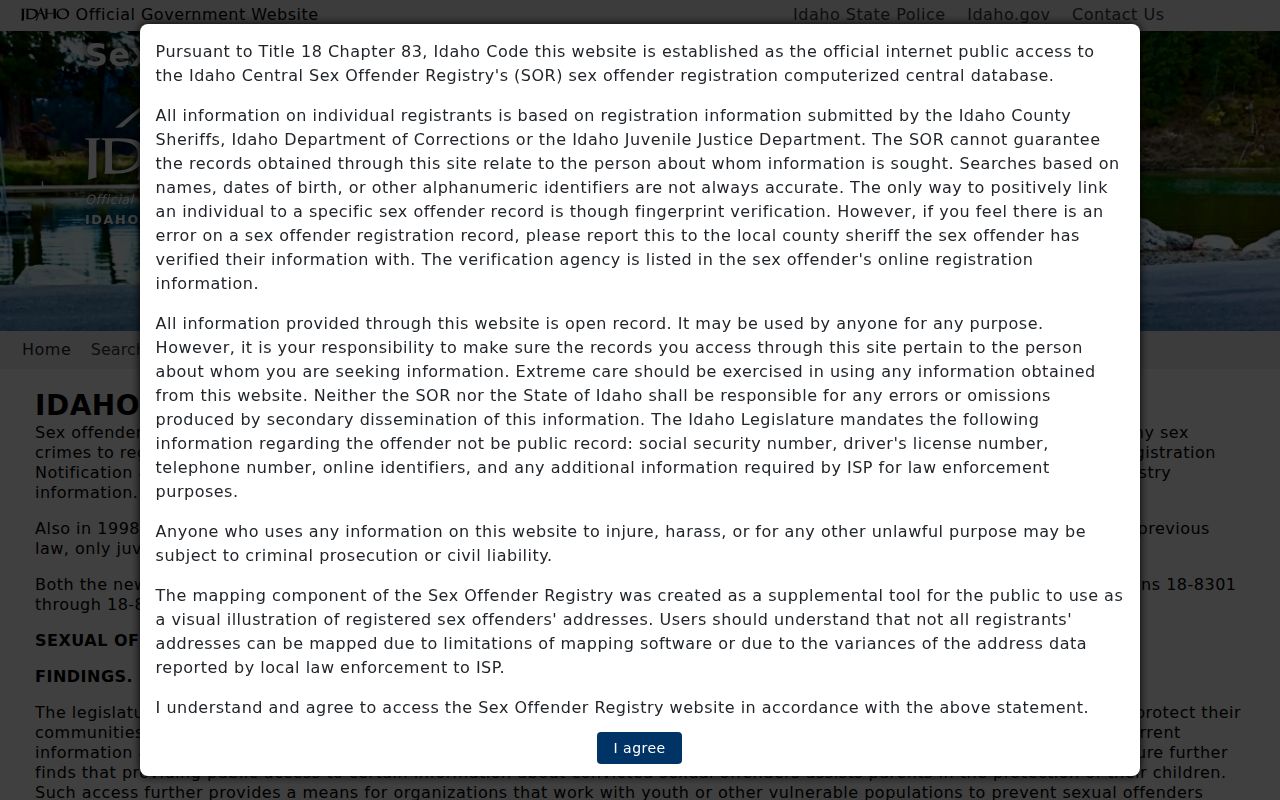
That notice is substantive. It explains why public registry details support awareness but cannot replace fingerprint verification.
Idaho County Offender Place Searches
Idaho offers several paths into the same registry. A name query requires a last name, with first name, city, and county available to narrow it. City and county dropdowns allow place-led searches. ZIP search can catch a location that does not match a city label, and the map accepts a street address with a one-, three-, or five-mile radius.
The registry search tabs show these distinct controls without centering any private person's profile.
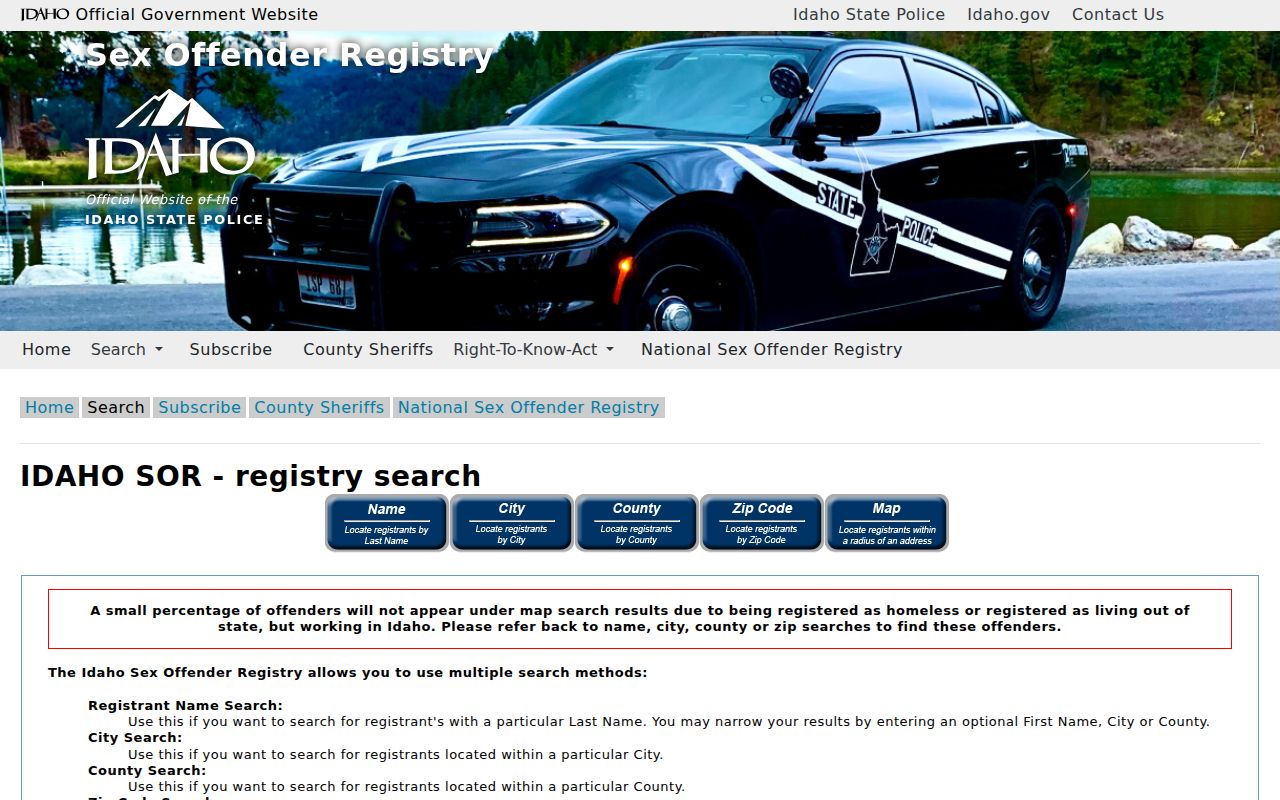
Results appear 15 per page. Repeat a broad Idaho County result with name, ZIP, or map criteria when a large list makes identity review difficult.
Idaho County Registry Searches
Accept the legal acknowledgment before opening the search. Keep the Adult or Juvenile database choice in view, since the portal exposes both as allowed by law. Never assume that a missing map pin means no registrant is associated with the area.
- Open the state search and accept its conditions of use.
- Choose Name, City, County, ZIP, or Map, then select Adult or Juvenile.
- For a county search, choose Idaho County. For a map, enter an address and a one-, three-, or five-mile radius.
- Compare the result with the full public profile and its verifying agency. Use fingerprints for a positive identity determination.
| Search mode | Fields or controls | Required or options |
|---|---|---|
| Name | Last name, first name, city, county | Last name required; Adult or Juvenile |
| City | City dropdown | Select city and database |
| County | County dropdown | Select Idaho and database |
| ZIP | ZIP text | ZIP and database |
| Map | Street, city, state, radius | Idaho; 1, 3, or 5 miles |
| Quick lists | Predator, non-compliant, pending | Direct public lists |
Idaho County Registry Map Limits
Map results are supplemental. Pins may be approximate. A person without a fixed home can be registered yet lack a conventional residential point. Someone who lives outside Idaho but works or attends school in the state may also fail to appear where a reader expects. Rural addressing across Idaho County adds another reason not to use one map query as a final answer.
Repeat the map search through county, ZIP, and name controls. Then read the profile's residence or habitual-location wording rather than inferring an exact home from pin placement. The registry withholds information that identifies protected relatives, household members, and employer associates.
Identity limit: ISP states that names and dates of birth cannot positively establish identity. Only fingerprints can do that.
Idaho County Registry Profile Fields
An Idaho public profile combines identity descriptors, a current image, registration location, offense information, and status. It may show more than one name or past name. Offense data can include registrable and other sex-offense convictions plus the place of conviction. A seven-day or longer temporary stay may create public lodging information.
| Identity | Name, aliases or prior names, and date of birth, subject to the identity warning. |
|---|---|
| Image & Description | Current photograph and physical descriptors. |
| Location | Residence or habitual location, school, and qualifying temporary lodging. |
| Offense | Registrable and other sex-offense convictions and conviction location. |
| Registration State | Verifying agency, compliant, non-compliant or pending indicator, and predator status where applicable. |
| Alerts | Track Registrant email and address-radius subscription tools. |
| Withheld | Victim data, SSN, driver's-license number, phone, online identifiers, protected associates, and law-enforcement-only facts. |
A profile is not a complete criminal case file. The public court docket contains charging and disposition events, while registry publication follows Idaho's registration statutes and its own public-field rules.
Idaho County Registry Radius Alerts
The state portal offers address subscriptions for a one-, three-, or five-mile radius. It also permits profile tracking by email for a named registrant's move. These tools serve different needs. An address subscription watches a place; profile tracking follows one published record. Confirm the email and chosen range during signup.
Alerts are a prompt to return to the official record. They do not cure an approximate pin, prove identity, or guarantee that every change reaches a subscriber at once. For community awareness near an Idaho County address, pair the alert with a fresh county or ZIP search.
When a profile seems wrong, do not contact or confront the listed person. Note the record and its verifying sheriff, then contact that official channel or ISP registry help at 208-884-7305 or idsor@isp.idaho.gov.
Idaho County Registration Levels and Duties
Idaho does not publish a SORNA Tier I, II, and III table. The meaningful public distinction is an ordinary registrant versus a court-designated Violent Sexual Predator. Registration is generally for life. Some eligible people can petition after ten years under Idaho Code §§18-8310 and 18-8310A, but the petition route is limited and is not a universal ten-year expiration.
| Idaho category | Duration | Verification pattern |
|---|---|---|
| Ordinary registrant | Generally lifetime, subject to limited statutory petition relief | Commonly annual |
| Violent Sexual Predator | Lifetime designation unless lawfully changed | Quarterly, with address verification between registrations |
| Homeless registrant | Underlying registration duty applies | More frequent reporting under rule |
Frequency can depend on legal status and current rules. Read the public status and contact the registration office for an official answer rather than imposing a tier model Idaho does not use.
Idaho County Offender Registration Office
Idaho County registration occurs through the Sheriff at 320 W. Main Street in Grangeville. The office posts its main line, 208-983-1100, but no special registry hours, appointment procedure, or public fee. Call before appearing, especially when traveling from a remote part of the county.
Idaho County Sheriff
320 W. Main Street
Grangeville, ID 83530
208-983-1100
Call to confirm registry procedure.
The sheriff verifies local registration facts and submits them into the state system. ISP maintains the central public interface. That split explains why a profile correction should start with the verifying sheriff when the disputed fact came from local registration, while technical portal help belongs with ISP.
Public users should report a suspected error through official channels. A profile's non-compliant or pending label is not permission for private investigation, contact, or enforcement.
Idaho County Offender Searches Through NSOPW
The National Sex Offender Public Website searches participating jurisdictions across state lines. It adds value when a person may have moved, when an Idaho County search produces an uncertain result, or when a family safety check covers travel outside Idaho. NSOPW points back to the contributing jurisdiction's public information and does not replace the Idaho registry for local detail.
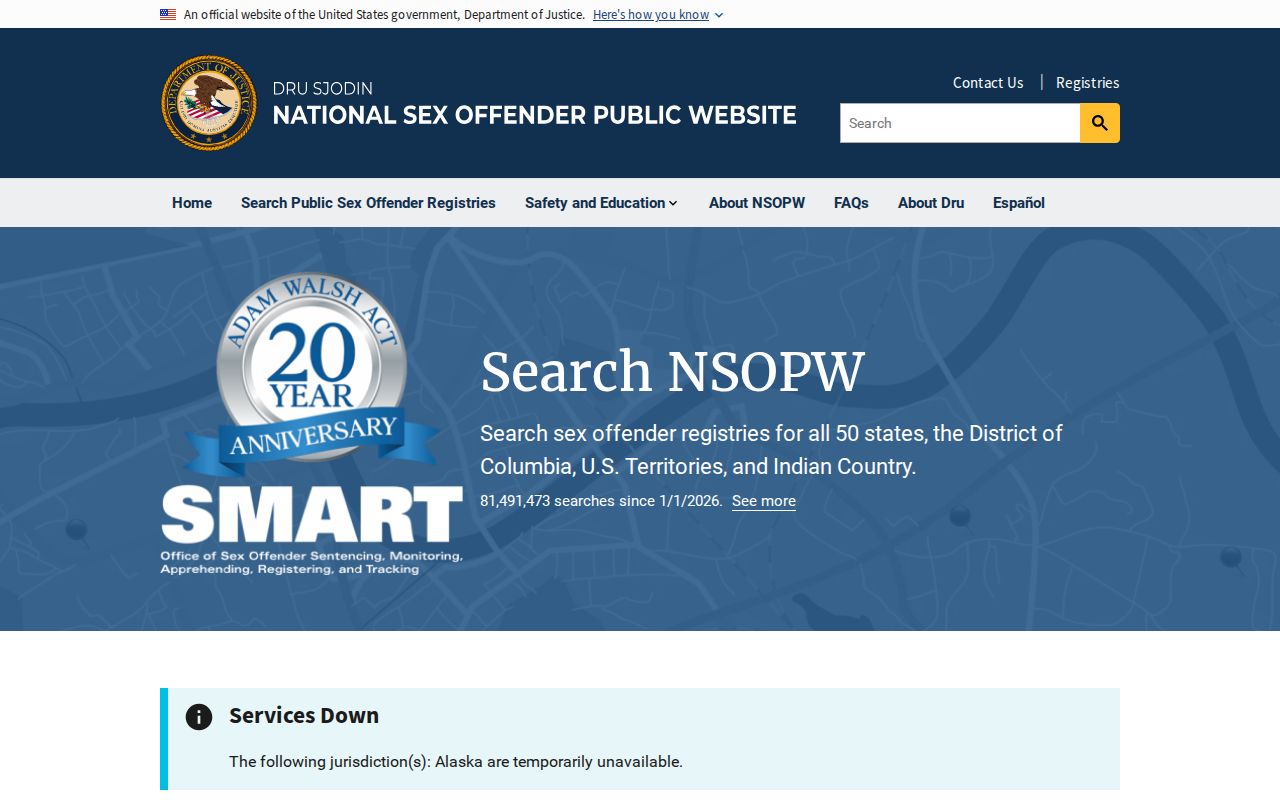
The national interface broadens geography, while Idaho's portal retains the local county, map, alert, status, and verifying-agency context.
Search names carefully and compare identifiers. Similar-name results in several states still do not establish that the person sought is the registrant.
Registry Data Is Not Crime Data
A registry lookup and the ISP Crime in Idaho dashboard answer different questions. Registry profiles concern statutory registration status. NIBRS data summarizes reported offenses submitted by agencies. The 2023 state report says Cottonwood Police Department did not submit NIBRS data that year, which does not mean no offenses occurred and says nothing by itself about registry counts.
The official crime-data interface illustrates the separate agency-reporting system.
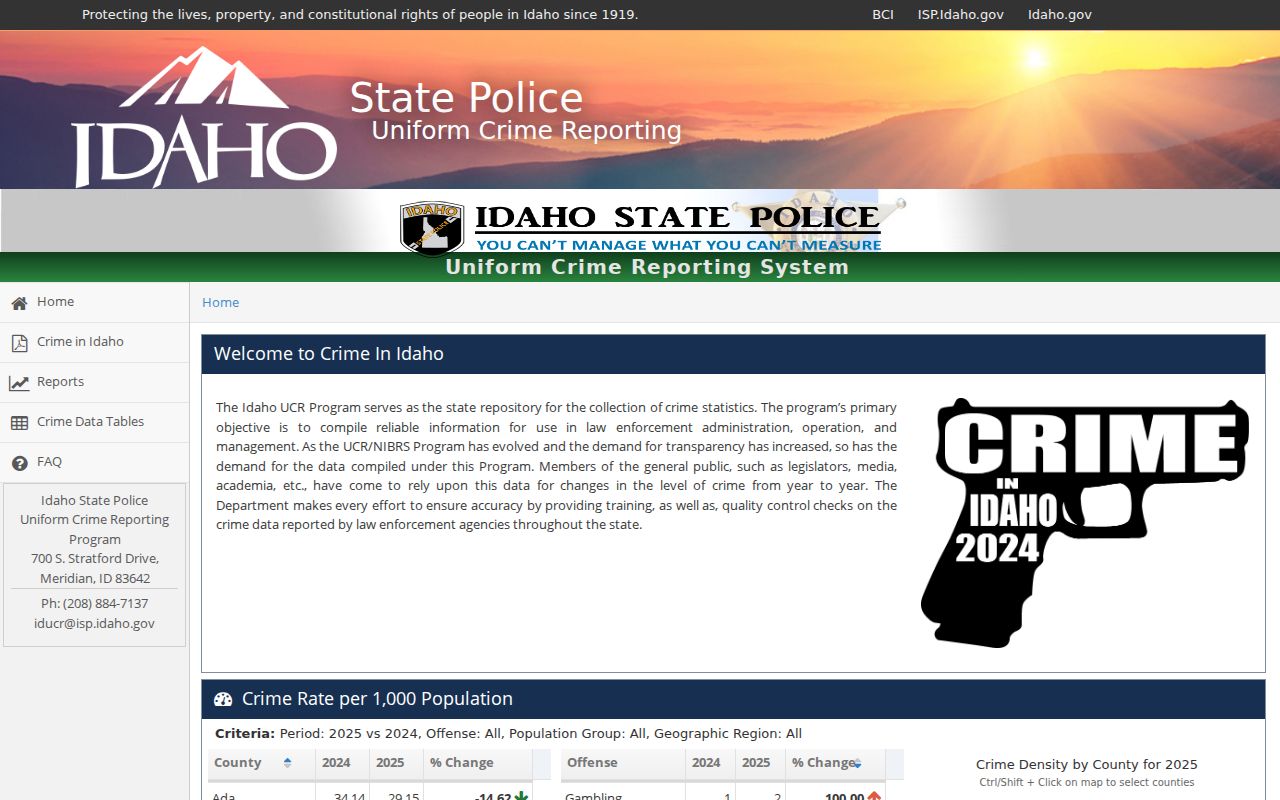
Keeping those systems apart prevents a registry search from being misread as a current crime-rate measure for Idaho County or any of its cities.
Lawful Idaho County Registry Use
Idaho publishes registry information for protection and informed safety planning. It is not a license to harass, threaten, intimidate, injure, or organize private punishment. Idaho Code §18-8326 addresses misuse used to commit a crime or cause physical harm, and §18-8413 may apply to misuse involving juvenile-registry information. Idaho Code §74-120 also bars commercial use and compilation into mailing or telephone lists.
Misuse can be a crime: Do not use Idaho registry information to harass, threaten, intimidate, injure, or commit another offense against a registrant or household.
For immediate danger, use the proper emergency channel. For a record problem or compliance concern, contact the verifying sheriff or ISP rather than approaching the person. Community notification works best when the public reads official records with care, respects protected household information, and treats alerts as prompts for calm safety steps.
The broader Idaho County court case lookup may show the public case outcome behind a registration-triggering conviction, but the docket and registry remain separate records with separate limits.